
How Professional Upholstery Cleaning Works
Updated: 17 hours ago
Upholstery cleaning is not simply carpet cleaning with a smaller tool. Furniture uses different fabrics, dyes, backing materials, cushion fillings, and construction, so the amount of moisture and chemistry has to be controlled more carefully.
Inspection comes first
The cleaner should look at the fabric, condition, stains, wear, and any manufacturer information that is available before choosing chemistry or moisture level.
Vacuuming removes dry debris
Hair, crumbs, lint, dust, and dry particulate soil should be removed before wet cleaning whenever possible.
Pre-treatment loosens soil
A fabric-appropriate pre-treatment helps break down body oils and everyday buildup. Delicate materials may require milder chemistry and more cautious agitation.
Controlled rinse and extraction
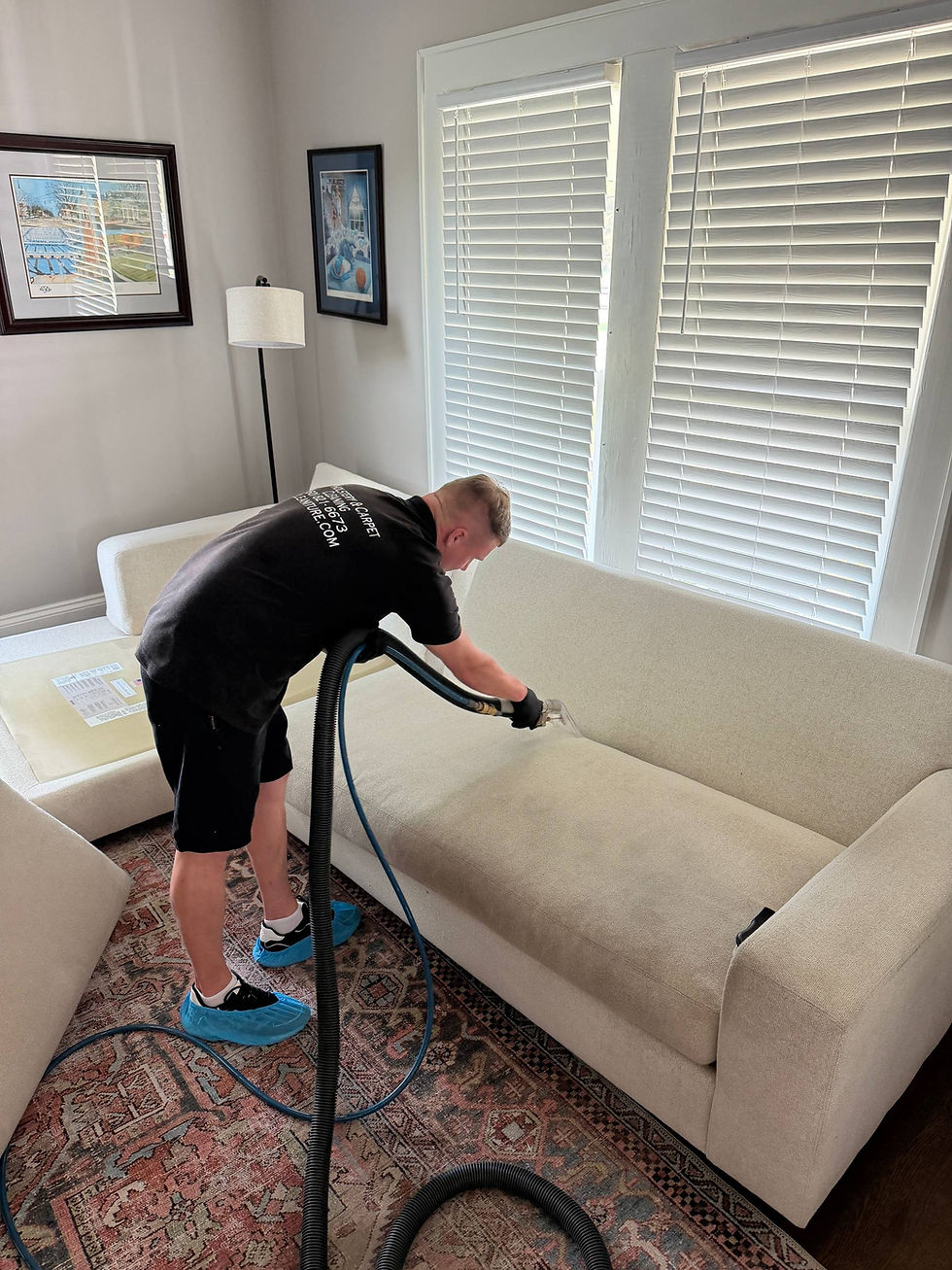
An upholstery tool allows solution to be applied and extracted with controlled moisture. The goal is to remove soil and residue without unnecessarily soaking the fabric or cushion.
Drying completes the process
Ventilation and airflow are important after cleaning. Drying time varies based on fabric, cushion thickness, humidity, and how much moisture the material safely required.
Fabric choice matters too. Read our guide to different sofa fabrics and cleaning methods.
Need help with the actual cleaning?
This article is meant to answer the general question. If you are looking to book professional upholstery cleaning, see the service page for the cleaning process, pricing details, and quote options.

Comments